
The Safeguarding Groundhog Day: the danger of prioritising activity over impact
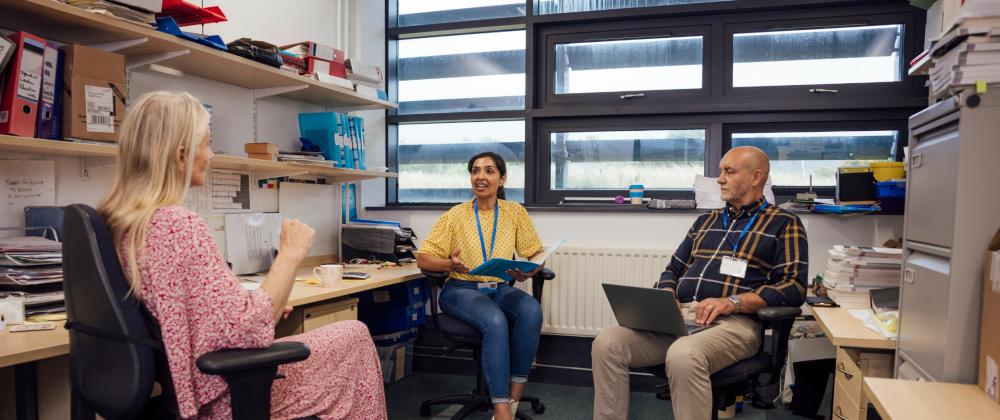
We’ve all been there. Sitting around the table, or more likely nowadays, on a Teams call, with a multitude of invested and empathetic professionals. Professionals with different expertise, perspectives and responsibilities. All concerned for the welfare and wellbeing of a child. However, when the updates come, it’s sometimes difficult to see the progress. Things are not improving for the child in question. In some cases, they are becoming increasingly unstable. All professionals acknowledge this, are disappointed and are keen to do more. But what? The next steps aren’t clear. Instead, they book in the date for the next core group in a month’s time. You hang up the call, or head to your car, and soon, you are onto the next disclosure, concern or referral. This is a pressure that an increasing number of education DSLs are facing.
Making a referral is an ongoing process, not a completed action in itself. However, when faced with stretched services, complex family dynamics, concerns about disrupting professional relationships or uncertainty about escalation processes, this can be easier said than done. Nevertheless, KCSiE is clear that where outcomes are not improving, concerns must be continually reviewed, inaction challenged and cases escalated where appropriate, ensuring we do not fall victims of 'start again' syndrome. Specifically, professionals must:
Review and reconsider: The DSL must ensure that individual cases are reconsidered or escalated to children's social care or other external services if the child's situation worsens or shows no improvement after initial intervention.
Prevent escalation of risk: Early intervention is designed to identify concerns early, but if the local actions fail to improve the child's welfare, the DSL must progress the concern rather than letting the case drift.
Professionally disagree: If the DSL or other staff feel that a referral or response from children's social care has not adequately addressed the issue, they are expected to follow local inter-agency escalation procedures to challenge the decision. You can find these on the website of your local safeguarding children’s partnership.
Serious case reviews repeatedly demonstrate the need for escalation in the face of continued harm. In fact, as acknowledged in KCSiE, failing to escalate concerns when a child's situation shows no improvement is one of the most common themes highlighted when child protection systems fail. Tragic cases and multi-agency reviews have identified specific, recurring systematic failures that stem from a lack of escalation.
The trap of "disguised compliance"
Serious case reviews frequently show that professionals can become over-optimistic when parents appear to engage with a school or service, while the child's actual lived experience does not improve. Without explicit tracking and escalation based on outcomes, the case drifts, exposing the child to prolonged risk.
"Rule of optimism" and case drift
National learning reviews point to a pattern where agencies keep restarting low-level interventions without recognizing that a child's circumstances are completely stagnant. A lack of meaningful change should prompt professionals to reconsider whether the threshold for statutory intervention may now be met.
Unresolved professional disagreement
High-profile reviews (such as historical cases like Victoria Climbié, Peter Connelly, and more modern local child safeguarding practice reviews) frequently highlight that a school or health practitioner disagreed with a social care decision but accepted the rejection rather than using their local multi-agency escalation policy to challenge it.
These reviews remind us that the key question is not “are services involved?”, instead, “is life actually getting better for the student?” This mantra should sit at the heart of every safeguarding meeting, referral, action plan and review.
So, what now?
Review your policy and ensure it is compliant. KCSiE is clear that safeguarding concerns require ongoing review and that referrals should be reconsidered or escalated where a child's circumstances are not improving. Do you have systems in place to ensure this happens?
Review any open cases or referrals. Has progress been made, or has the case stagnated? Are the right professionals involved and is it being given the time and status it deserves? Remember, when reviewing whether progress has been made, consider not only whether services have been delivered, but whether the child's lived experience and voice indicate that circumstances have genuinely improved. If not, follow your local escalation protocols and have the confidence to challenge where you believe the child's circumstances are not improving or risks remain.
Have confidence. Schools often have the most consistent day-to-day contact with children and are uniquely placed to recognise when concerns persist or circumstances fail to improve. This position brings both insight and responsibility. Safeguarding is rarely strengthened by waiting for somebody else to act. Professional challenge, respectful escalation and relentless focus on the child's lived experience remain some of the most important tools we have as safeguarding professionals.
Do not forget about the Early Years. EY professionals are often undervalued and underplayed in the safeguarding arena yet they have the best keyworking practice and partnership with parents and their voice is often not heard or not loud enough. They are uniquely placed to highlight concerns and spot when help may be needed, especially when talking about vulnerable babies, and those who can't yet speak. Schools and colleges should consider the links they can build with local EY settings when working with families.
Regular and good quality supervision is invaluable for stretched DSLs. Ensuring you have the time to step back and reflect, in the safety of a protected conversation with a fellow professional, can make all the difference. More information about supervision provided through Safeguarding Network is available here.
The measure of effective safeguarding activity is not whether meetings are taking place, plans exist, or referrals have been made. The measure is whether life is actually getting better for the child. If it isn't, professionals have a duty to stop, reassess and escalate. Because safeguarding success is not measured by the number of meetings held , plans written or professionals involved, but by whether a child's life is safer, happier and better as a result.
About the author: Claire Bellman is a Designated Safeguarding Lead and Deputy Head Pastoral with over 20 years experience in schools.
Sign up for our free safeguarding Bulletin
Interested in membership?
Join over 3,500 DSLs and nearly 40,000 staff in 1,500 education settings receiving high value support, consultancy and the tools you need to keep the children in your care safe.