
Key Changes to Working Together to Safeguard Children 2026
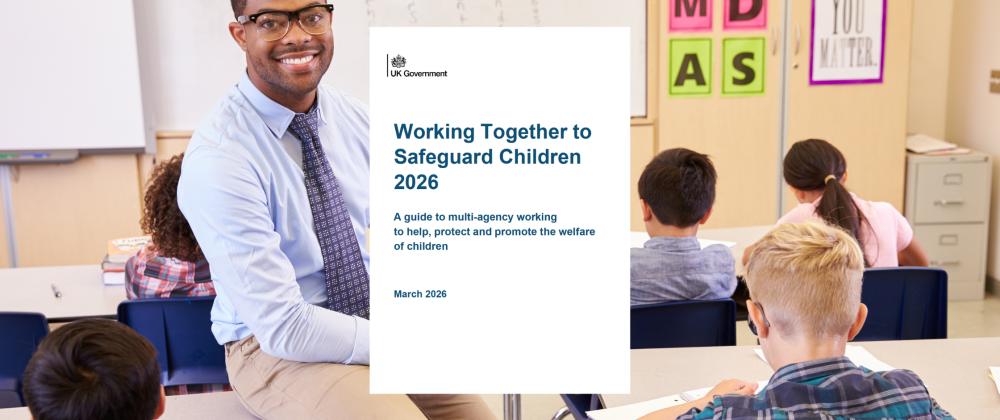
The 2026 update to Working Together to Safeguard Children builds on the previous guidance and the wider children’s social care forthcoming changes. There is a much stronger emphasis on practice and not just policy. Schools, colleges, and other educational settings must also have regard to the Keeping children safe in education statutory guidance which provides further guidance as to how they should fulfil their duties in respect of safeguarding and promoting the welfare of children in their care. Early years providers have a duty to comply with the welfare requirements of the Early Years Foundation Stage (EYFS).
Stronger early help, family support and multi-agency accountability reinforces that safeguarding is a shared responsibility across all agencies. There are clear expectations that organisations should work together to identify need earlier and provide coordinated support with a harder shift towards family-centred practice. This applies to those children living with birth family, extended family, in kinship care, under special guardianship, adopted, looked after, in foster care, or in residential settings. The guidance also specifically refers to unborn babies with help, support and protection before birth where concerns are present.
To do this, the guidance encourages professionals to work in partnership with parents and wider family networks while maintaining a clear focus on the child’s safety and lived experience. There are expectations around earlier intervention, improved information sharing and stronger oversight of vulnerable children plus continued emphasis on recognising harm outside the home. Professionals are expected to remain curious, responsive, collaborative and child centred. There is also expectation for further shift towards understanding contextual and systemic issues. Organisations are expected to actively learn from serious safeguarding incidents as highlighted from practice reviews, case studies and reflective learning.
Here are some key learning points for ALL school and education staff to ensure appropriate training can be implemented:
Know how to analyse information to identify issues earlier.
Know when to share information with other practitioners and what action to take to support early identification and assessment.
Be aware of and be able to identify where a pregnant person might need help or support to provide safe and suitable care for their unborn child. Keep infant abuse explicitly on the radar for all families that you work with.
Be able to identify and recognise all forms of abuse, neglect, and exploitation.
Understand domestic and sexual abuse including controlling and coercive behaviour, teenage relationship abuse, honour, faith or belief-based abuse, as well as parental conflict that is frequent, intense and unresolved.
Understand the complexity of kinship families and be aware that they may need to support both parents and kinship carers as well as children all at the same time.
Understand threats, including online harm, grooming, sexual exploitation, criminal exploitation, radicalisation, and the overlap that can occur between online harm and harm experienced in person.
Be aware of new and emerging technologies, such as artificial intelligence, and the role that online platforms, including gaming and social media platforms, can play in grooming children and facilitating and/or causing harm.
Awareness that a child and their family may be experiencing multiple needs at the same time.
Recognise how trauma, racism, discrimination, and past experiences recently or historically, with services affect relationships and adapt practice. Respect the importance of different cultural models of parenting and family life.
Think more broadly about the child’s lived experience. The child’s voice must be recognised and not get lost in professional or family voices that may shout louder or processes that can overwhelm practitioners. Direct work with the child is essential to understanding their voice, including non-verbal children.
Support respectful challenge and inclusive practice at leadership level and in frontline safeguarding practice.
Use effective language that is easy for all to understand. Become familiar with terminology such as family group decision-making and ensure that all partners including children and families understand safeguarding literacy. Do not assume they know.
With such a strong emphasis on multi-agency working in the guidance here are some points to consider in your reflections:
We know that single agencies work well but can fail families when they aren’t joined up.
Multi-agency working is a culture that relies on communication, respect and trust with an understanding of respective roles.
Prompt information sharing is vital in safeguarding and GDPR is not a barrier to timely and effective sharing of information.
Early help is critical to supporting families and making effective change.
Relationships and good communication with families is vital.
Safeguarding effectiveness is only significant when the multi agencies operate together and with partnership with families. The challenge for leaders is to ensure safeguarding is not just compliant, but connected, consistent and child-centred.
Safeguarding Network provides a wide range of face-to-face or virtual training courses, led by experienced practitioners, to improve your understanding of safeguarding and child protection. Ideal for Leaders, DSLs, all staff, and governors with safeguarding responsibility.
Documents supporting this article:
Sign up for our free safeguarding Bulletin
Interested in membership?
Join over 3,500 DSLs and nearly 40,000 staff in 1,500 education settings receiving high value support, consultancy and the tools you need to keep the children in your care safe.
Basket
Your basket is empty
Add a course or resource, then return here to checkout.
Your basket
Add more places?
Enter the total number of places you need for this course.