
Early Years and Keeping Children Safe in Education 2026
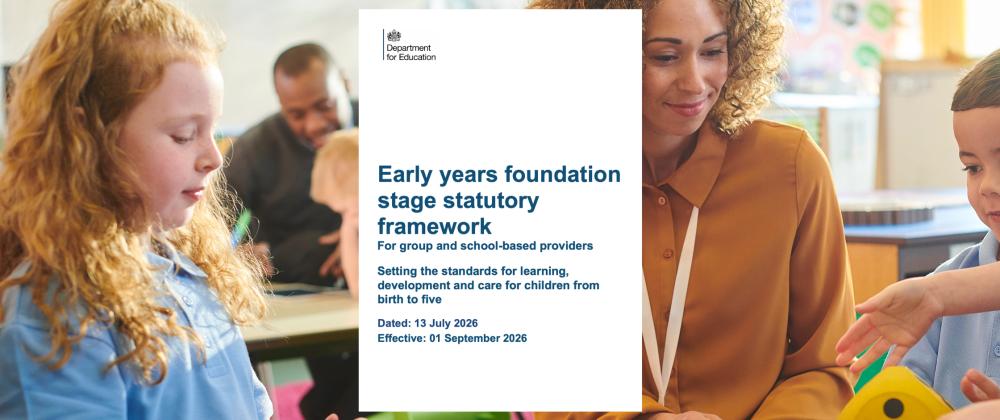
Keeping Children Safe in Education (KCSiE) is statutory guidance for schools and colleges. Most private, voluntary and independent (PVI) early years settings are not legally required to follow KCSiE in the same way that schools are.
Many PVIs and childminder settings hear ‘KCSiE’ and think, ‘That's only for schools’ and technically, they're right. However, practically, they miss some excellent safeguarding guidance by ignoring it.
PVI settings must meet the safeguarding and welfare requirements of the Early Years Foundation Stage (EYFS) statutory framework, which sits alongside Working Together to Safeguard Children. The EYFS doesn't provide detailed guidance on every safeguarding issue, but it does expect providers to work within the wider safeguarding system that is described in Working Together to Safeguard Children.
KCSiE uses the same principles and explains what they look like in an education setting and whilst KCSiE may not be statutory for a standalone nursery, much of the good practice it contains is highly relevant.
The three documents complement one another rather than compete.
Working Together explains how agencies should work together to safeguard children.
The EYFS explains what early years providers must do.
KCSiE provides practical examples of what excellent safeguarding looks like in an education environment.
What does this mean for PVI settings?
A nursery manager doesn't need to rewrite all their policies around KCSiE, but they should ask:
Would KCSiE strengthen our practice?
Are there things in KCSiE that would help us safeguard children better?
Does it help us think differently about emerging risks?
KCSiE offers useful guidance around:
professional curiosity
staff culture
low-level concerns
online safety
information sharing
safer recruitment
allegations management
child-on-child abuse
recognising vulnerability
creating a safeguarding culture
None of these principles conflict with the EYFS. They reinforce that strong safeguarding culture.
One of the best things that nurseries and childminders do is family help and support. This is clearly done through effective key worker practice and good partnership with parents and listening and responding to the child’s voice.
Working Together places early intervention and family help at the heart of safeguarding. It also reminds us that safeguarding isn't simply about recognising significant harm, it's about recognising when families need help before harm occurs.
KCSiE reflects this by expecting education settings to understand local family help arrangements and refer children before problems escalate.
For PVI settings, this is very familiar and clearly understood.
If you're a PVI setting, don't dismiss KCSiE because it isn't written specifically for you. Read it through the lens of your own practice and ask: would this help us safeguard children better? Inevitably, your answer will be yes and therefore it deserves a place in your safeguarding culture.
Children don't experience safeguarding any differently because they're in a nursery instead of a school. Abuse doesn't wait until Reception class. Neither should effective safeguarding. The statutory documents may differ, but the principles remain the same. Whether you're working from the EYFS, Working Together or KCSiE, the child is still at the centre of everything you do.
What has changed in KCSIE 2026 and what does that mean in practice?
The key implications for Early Years
1. Family Help becomes much more prominent
Although early years professionals have always been excellent at early intervention, KCSiE now places much greater emphasis on Family Help and practitioners understanding referral pathways before statutory intervention.
For nurseries this means reviewing referral pathways and ensuring staff understand the difference between universal support, targeted Family Help and Children's Social Care. It also means making sure concerns don’t get left because it's not quite child protection.
Nurseries are often the first professionals to notice when things go wrong or aren’t right, such as:
changes in family circumstances
parental mental health difficulties
domestic abuse
financial hardship
neglect emerging over time
developmental concerns
Early years has always been about working alongside families early. KCSiE reinforces this.
2. Professional Curiosity and Staff culture
The wording around professional curiosity and recognising overlapping vulnerabilities is strengthened in KCSiE. Staff are reminded that safeguarding issues rarely exist in isolation and practitioners should look beyond individual incidents.
For early years this means asking questions such as:
Why has this child suddenly become withdrawn?
Why is Mum never making eye contact?
Why has attendance changed?
Why are incoming injuries becoming more frequent?
What else might be happening?
It is about not jumping to conclusions or being presumptuous but being actively curious.
In early years this is about asking what attitudes do children see? What language do adults model? How do staff challenge stereotypes? What does respectful behaviour look like for a three-year-old?
This all links to British Values and your equity, diversity, inclusion and behaviour policies.
4. Technology
Most people assume online safety starts in primary. It doesn't. It starts very much in early years.
KCSiE expands references to AI-generated imagery, misogynistic content online, online abuse, and deepfakes and generative AI guidance. There is increasing recognition of misogyny, discriminatory attitudes, harmful online cultures and what respectful relationships look like both online and in person.
Early years practitioners are increasingly seeing YouTube exposure, children in pushchairs with tablets, on gaming apps, using family phones and demonstrating inappropriate language copied from social media.
As practitioners working with the youngest children, we need to become more aware of their digital worlds and support their parents appropriately.
5. Safeguarding isn't just about children
Another continuing thread running through KCSiE is that safeguarding is everyone's responsibility. That means ensuring all staff understand Part One, not just those working directly with children.
For nursery organisations this could include office staff, cooks, cleaners, maintenance, transport staff, volunteers etc. It is good practice for all of your early years team to be familiar with this guidance.
6. EYFS Safer recruitment
KCSiE continues to reinforce that safeguarding is about culture, not simply DBS checks and references. Robust recruitment procedures, safer recruitment training and an organisational culture that deters unsuitable people remain central to enrolling the right people into your team.
Vetting helps identify known risks. It does not tell us whether someone who has never come to notice could still harm a child. Safer recruitment continues every day through vigilance, professional curiosity and a culture where people feel able to raise concerns.
DBS changes For PVI settings
Most PVI providers are governed by the EYFS rather than KCSiE, so this specific change is not a direct statutory requirement for them. However, because the definition of regulated activity comes from safeguarding legislation rather than KCSiE itself, providers should ensure they understand whether any volunteers or other adults working in their setting fall within that definition.
You must review each volunteer role against the new definition of regulated activity and seek advice if you're unsure.
This isn't about creating barriers for volunteers. Volunteers bring enormous value to early years settings. It's about making sure the right safeguarding checks are in place for the role they're carrying out, so that everyone, children, volunteers and settings themselves, is protected.
Parents or carers who help out rarely or only occasionally will not need to get an enhanced DBS check with children’s barred list information. Those that help infrequently will not be affected, for example, helping out at an occasional daytrip. The change only applies to those parents or carers who help on a more frequent basis.
The change applies to those who work or volunteer in a supervised role with children frequently or:
on more than 3 days in a 30-day period
overnight between 2am and 6am
From 1 September 2026, if a volunteer's role meets the definition of regulated activity, they will require an Enhanced DBS check with children's barred list information before they begin volunteering.
For early years leaders this means reviewing the roles of everyone who works with children, not just paid staff.
Ask:
Do we use regular volunteers?
Do grandparents come in weekly to read stories?
Do parents help on outings?
Do volunteers support forest school or gardening sessions?
Do students return after placement to help in the setting?
Some of these individuals may now require different pre-appointment checks than previously. The same principle applies to other adults who have regular opportunities to work with children, such as minibus drivers employed by the setting, lunchtime supervisors, activity leaders or sports coaches. The important question is not their job title, but whether the work they undertake amounts to regulated activity.
Concluding thoughts
Is KCSiE only for schools and colleges? What does it mean for early years?
Legally, many PVI settings will continue to work primarily within the EYFS statutory framework alongside Working Together to Safeguard Children. However, that doesn't mean KCSIE has nothing to offer.
KCSiE 2026 is an affirmation of good early years safeguarding. It reinforces the importance of professional curiosity, working in partnership with families, creating a positive safeguarding culture, understanding emerging risks and acting early when children need help.
Whether you choose to use KCSiE as a reference document alongside the EYFS is ultimately a decision for your setting. However, if guidance helps us strengthen safeguarding practice, improves professional thinking and ultimately helps us keep children safer, then it is well worth reading and applying where relevant.
Safeguarding is not about complying with documents. It is about protecting children, something every quality early years professional is already committed to doing.
Sign up for our free safeguarding Bulletin
Interested in membership?
Join over 3,500 DSLs and nearly 40,000 staff in 1,500 education settings receiving high value support, consultancy and the tools you need to keep the children in your care safe.
Basket
Your basket is empty
Add a course or resource, then return here to checkout.
Your basket
Add more places?
Enter the total number of places you need for this course.