
Can any school operate with a “no contact” policy?
“My school has a no touch policy so I am not sure how this new guidance or training will work for me.”
This statement was shared as staff from a range of schools took part in a two-day training course designed to support and equip them with a range of strategies to keep young people safe when behavioural difficulties arise, including some physical intervention and breakaway techniques.
“No touch”, or more specifically "no contact”, policies at a glance may sound like the school or organisation is really committed to safeguarding. Parents or carers may feel reassured that adults in school will not make physical contact with their children and that they are protected from “physical abuse”, but can a school run safely with such policies?
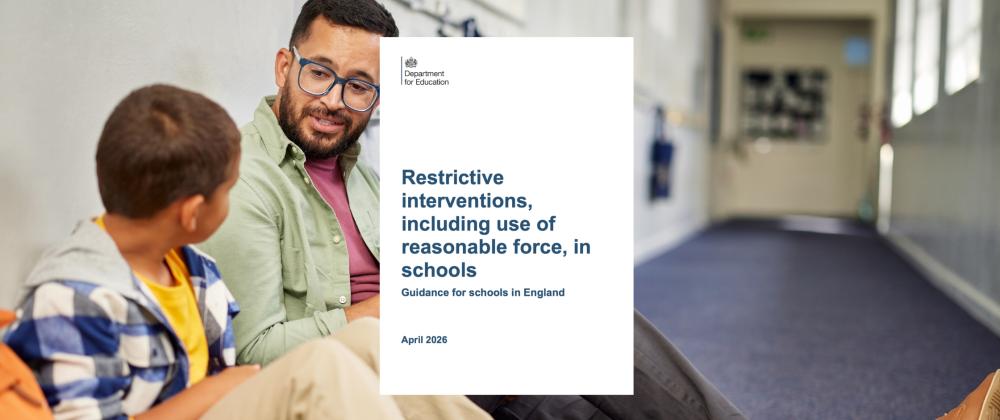
The revised guidance from The Department for Education (DfE) in England "Restrictive interventions, including use of reasonable force, in schools" came into effect on 1st April 2026 and introduced significant changes regarding transparency, accountability, and the safeguarding of pupils. One of the core principles that has not changed is that schools should not adopt any form of “no contact” policy as it can prevent staff from protecting pupils from harm.
There is no doubt that any sort of restrictive intervention or reasonable force should be the last resort. However, there will inevitably be times where staff will need to use reasonable force or a restrictive intervention, including to prevent a pupil:
causing injury to themselves or others.
committing a criminal offence.
damaging property.
causing disorder among pupils at the school.
Staff should be confident that their school’s policy reflects the April 2026 changes, recognising that there may be occasions when physical contact or restrictive intervention is necessary, however, they should not expect to have to use it. They should also feel assured that their professional conduct will not be called into question when such contact or intervention is carried out appropriately and proportionately.
Exploring the specific phrase “no contact” further, indicates that schools who adopt such stringent policies could be missing out on key relationship building opportunities. For example, non-verbal greetings such as a fist bump could reassure a child that entering the classroom is a safe and welcoming. A light touch on the arm to a pupil who is nervous in an exam could offer the subtle reassurance they need to keep going. Schools should also consider that pupils may need to use other forms of touch such as to administer basic first aid, comfort at times of distress or simply to congratulate an achievement in the form of a handshake.
Safeguarding pupils from physical harm by adults is way beyond adopting a “no contact” policy for its staff. Schools and leaders should focus on developing a culture where any type of physical intervention is safe, reasonable and necessary, and where staff feel confident and protected if they need to use it.
The 2026 guidance marks an important step forward in keeping pupils safe and asks teachers to show clearly that they are acting reasonably in these situations. Policies should be written with this in mind to ensure that both staff and pupils protected. It is important to pause and consider how the experience might feel from the student’s perspective, while also being aware of and managing our own emotions in the moment and having the appropriate post incident support.
“No contact” and restrictive intervention are two very different aspects considered in the revised guidance. The everyday positive and relational moments are very different from any restrictive interventions and should be considered an important part of a pupil’s school experience. Schools should not operate ‘no contact’ policies, but instead should think about the important role touch does play in the lives of our students and our staff, consider how we frame and lead cultures where people understand the boundaries of their behaviour and feel clear, accountable and supported about the times when they need to intervene.
About the author: Melissa Pollard is a Designated Safeguarding Lead with 20 years experience in education and children's mental health.
Sign up for our free safeguarding Bulletin
Interested in membership?
Join over 3,500 DSLs and nearly 40,000 staff in 1,500 education settings receiving high value support, consultancy and the tools you need to keep the children in your care safe.
Basket
Your basket is empty
Add a course or resource, then return here to checkout.
Your basket
Add more places?
Enter the total number of places you need for this course.