
Restrictive interventions, including use of reasonable force, in schools
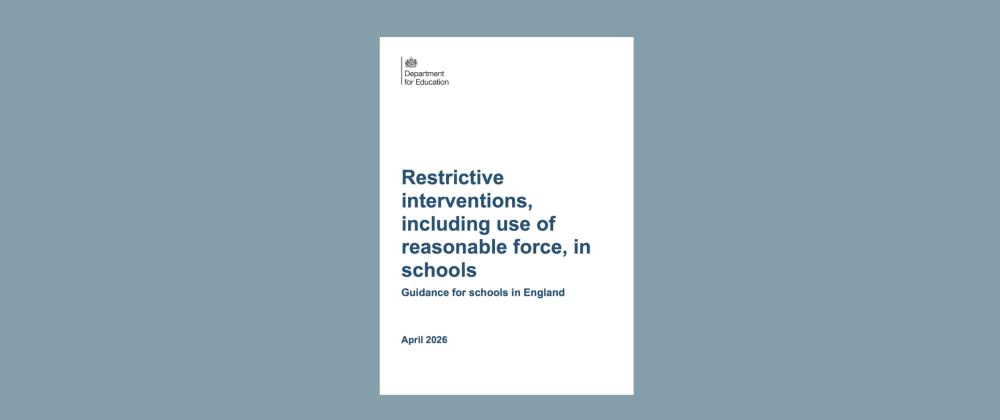
The new guidance for restrictive interventions, including use of reasonable force in schools in England was released in late December 2025, and will be effective from April 2026.
This guidance illustrates how and when school staff can use restrictive interventions including reasonable force and seclusion to keep pupils and others safe.
Behaviour management procedures should be transparent, show accountability and practice safe techniques, helping build trust with families and ensure pupil welfare is central. The need for interventions should be minimised and where used, they should be lawful, safe, and appropriate.
Schools should use early support, de-escalation and positive behaviour strategies to reduce the need for any intervention with the emphasis on prevention. The use of restrictive intervention should only be used when absolutely necessary. When used it must be necessary, proportionate to the circumstances, and lawful. It should only occur when there’s a real and serious risk to someone’s safety, or to prevent serious disorder or significant damage. Any force used should only be for the minimum amount of time necessary for that situation and staff who use interventions should use their training and judgement, removing holds or moving to less restrictive holds as soon as is possible. Staff should be properly trained and know their procedures and the child or young person should be kept fully informed as to what is happening throughout.
Seclusion should only be used as a safety measure and never as a punishment. After any incidents schools should support pupils and staff involved, assess medical cares or needs. It will be a statutory duty for schools to make a full record of every incident where force or seclusion is used. It must be reported to the pupil’s parents or carers as soon as practicable. This is a legal requirement.
Schools must consider the needs of pupils with SEND or other vulnerabilities, recognising these students may be disproportionately involved or affected and they may need tailored support and prevention planning as per their individual needs
Recording is also key. Governing bodies and safeguarding teams should use records of incidents to assess, reflect on and improve practice. Any trends should be analysed, and policies, procedures and practice improved to further reduce future use of restrictive interventions.
Sign up for our free safeguarding Bulletin
Interested in membership?
Join over 3,500 DSLs and nearly 40,000 staff in 1,500 education settings receiving high value support, consultancy and the tools you need to keep the children in your care safe.
Basket
Your basket is empty
Add a course or resource, then return here to checkout.
Your basket
Add more places?
Enter the total number of places you need for this course.