
Safeguarding, the Schools White Paper and the SEND funding announcement

On February 23rd, the Government released their White Paper, Every child achieving and thriving and an accompanying consultation on the proposed Special Educational Needs reforms. Both are long, complex and far-reaching documents that envision a wide ranging and ambitious reset of the whole education system and beyond, impacting school’s culture and therefore safeguarding. It aims to build on partnership working with health and other services and a recognition that schools alone cannot deliver all the services children need.
Equally, effective school safeguarding cannot be delivered by the DSL alone. It is dependent on collaborative working across the school staff team, particularly the partnership between the DSL and SENCo. There is an inevitable cross over between their work. Some will involve the same children and their families. Both the DSL and SENCo need to be aware of the additional safeguarding vulnerabilities faced by children with SEND. It is key that both these professionals have a working understanding of the systems and processes that shape each other’s work. This means that DSLs need some understanding of these proposed SEND reforms and how they will impact the children in their school.
These proposals involve significant budgetary commitments that will impact the staff training within schools and beyond and numerous other issues that touch on safeguarding. One of the aspirations of the proposals is the creation of a national SEND system based on digital paperwork that will transfer more directly between settings, localities and key stages. This will change how information is moved between schools and the way that children and their needs are tracked across the education system.
Children at the Targeted Plus level of the newly calibrated graduated response will have access to support from a multi-agency team of professionals called ‘Experts at Hand’ which will include EPs (Educational Psychologists) and Speech and Language Therapists. This will enable them to access expert support based on need without requiring a diagnosis. For children with ‘complex needs’ the higher level, Specialist Support, will be based on nationally agreed Specialist Support Packages. These will be included in national thresholds known as the Inclusion Standards which will ensure greater consistency of provision across the country and increased clarity about children’s entitlements. This should make it easier for all professionals to understand the support that children should and could be receiving.
The statutory level of SEND support will continue to be under an EHCP (Education, Health and Care Plan). The role of both Health and Social Care at each the support levels in the new system will be clearer. Additionally there will be a fast tracked system for under-fives with complex needs, under the leadership of health services, to ensure that their SEND needs are identified before they start school.
Schools will retain an ongoing role in the early support and prevention of poor mental health. But mental health support which involves a clinical intervention will be moved out of the education system and fully into the remit of health services. Schools will continue to be supported by the expanding Mental Health Support Teams (MHSTs) with the Government aiming to provide access to specialist mental health professionals in every school.
The documentation includes several key points that have direct relevance to Safeguarding:
Best Start Family Hubs will act as a single front door for families, making it easier for them to access the right help at the right time. They will include a named SEND professional. They will play a vital role in identifying needs and intervening swiftly with evidence-based support. They have been allocated significant funding.
There is a clear commitment to integrating education formally into new multi-agency teams, establishing schools as the fourth safeguarding partner alongside LA, police and health services (p.20). Further it is added ‘that education is automatically, and by necessity, part of local safeguarding arrangements and that education's voice is captured in decisions about child protection priorities and practice.’
The SAFE (Support, Attend, Fulfil, Exceed) Taskforces programme being piloted in 10 serious violence hotspots will be extended to tackle children’s vulnerability to violence by partnering schools within a local authority area together with local education, safeguarding and police professionals to inform cross-government commitments on partnerships and school-based support in communities most affected by violence, including knife crime.
These proposed SEND reforms are ambitious and are part of a wider plan to enable children to achieve in schools by rebuilding public services -education, local government, health and safeguarding partners- across communities. To be effective these will need the engagement with the consultation from across the education and wider community, not just those in SEND leadership.
About the author
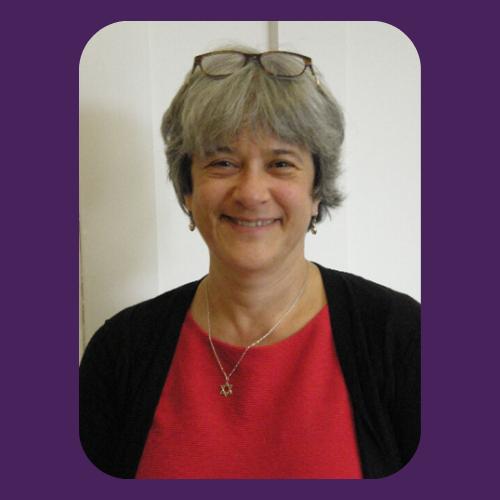
Sara Alston has over 38 years teaching experience in classroom and leadership roles. As an Education Consultant and Trainer for SEA Inclusion & Safeguarding, Sara specialises in SEND and Safeguarding providing support and training to schools ranging from conference presentations to bespoke work with individual staff including SEN and safeguarding training, SEN and Safeguarding Reviews and DSL supervision.
Read her thoughts about the SEND White Paper on her blog.
Sara is the co-author of The Inclusive Classroom: A New Approach to Differentiation and author of Working Effectively with Your TA. Her next book Questions …. On Safeguarding (Routledge) is due out in 2027. She writes regular articles for SecEd and Headteacher Update.
Sign up for our free safeguarding Bulletin
Interested in membership?
Join over 3,500 DSLs and nearly 40,000 staff in 1,500 education settings receiving high value support, consultancy and the tools you need to keep the children in your care safe.
Basket
Your basket is empty
Add a course or resource, then return here to checkout.
Your basket
Add more places?
Enter the total number of places you need for this course.