
Early Years Foundation Stage 2026 - Strengthening safeguarding in the early years
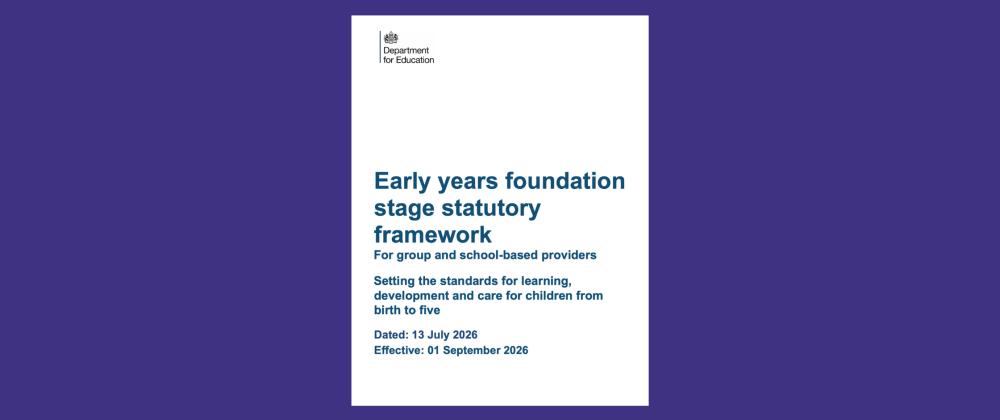
The Department for Education has published updated EYFS Statutory Frameworks for both childminders and group and school-based providers, which come into effect from 1 September 2026.
Whilst many of the changes clarify existing expectations, several represent a strengthening of safeguarding requirements. Early years providers should take time to review the revised framework, update policies where necessary and ensure all staff understand what the changes mean in practice.
Safer Sleep
The updated framework now brings the safer sleep requirements into the main body of the EYFS rather than requiring providers to refer to separate guidance. This reflects the importance of safer sleep practices in reducing the risk of sudden infant death and reinforces that safer sleep is a core safeguarding responsibility for all providers caring for babies.
Banned Dog Breeds
Registered childcare must not operate from premises where a banned dog breed is kept or is otherwise present. Providers working from domestic premises, including childminders, should ensure they fully understand how this requirement applies to their setting.
Notifications to Ofsted
The threshold for notifying Ofsted, or a Childminder Agency, has been strengthened. Providers must now notify allegations of harm, rather than serious harm, involving anyone living, working or caring for children on the premises. This change reinforces the importance of early reporting and transparency where safeguarding concerns arise.
Safer Recruitment
The revised framework strengthens safer recruitment by requiring:
Enhanced DBS checks for all volunteers, including those who are supervised.
New employees must not begin work before their enhanced criminal record check has been received.
These changes place greater emphasis on ensuring appropriate safeguarding checks are completed before anyone has access to children.
Staff Suitability
Providers must review the information staff are required to disclose where it may affect their suitability to work with children. This is an opportunity to revisit staff induction, declarations and ongoing suitability procedures to ensure everyone understands their responsibilities.
Domestic Premises
For group and school-based providers operating on domestic premises, there is now a requirement to notify Ofsted or the Childminder Agency of changes to anyone aged 16 or over living or working at the premises. This brings these settings into line with existing childminder requirements.
What Should Providers Do Now?
The revised EYFS is more than a policy update. It is an opportunity to review safeguarding culture across your setting.
Leaders should consider:
Reviewing safeguarding, safer recruitment and suitability policies.
Updating induction and safeguarding training to reflect the new requirements.
Ensuring staff understand the revised notification duties.
Reviewing volunteer recruitment processes.
Checking procedures relating to safer sleep and domestic premises where applicable.
Considering whether current practice reflects both the letter and the spirit of the revised framework.
Although many of the amendments build on existing expectations, they reinforce a clear message: safeguarding remains everyone's responsibility, and robust systems, professional curiosity and safer recruitment continue to be at the heart of protecting young children.
Sign up for our free safeguarding Bulletin
Interested in membership?
Join over 3,500 DSLs and nearly 40,000 staff in 1,500 education settings receiving high value support, consultancy and the tools you need to keep the children in your care safe.
Basket
Your basket is empty
Add a course or resource, then return here to checkout.
Your basket
Add more places?
Enter the total number of places you need for this course.